Home / Case Studies / Ecommerce Inventory, Channel Profit & Cash Model
CASE STUDY
InteractiveEcommerce Inventory, Channel Profit & Cash Model
SKU-level demand, CM3 by channel and a purchase plan with deposits and transit time, so every buying and ad decision shows up in cash.
Business challenge
A growing direct-to-consumer brand saw sales rise while cash stayed tight, and could not tell which channels and SKUs made money after fees and advertising, or how much cash was locked in stock.
Outcome
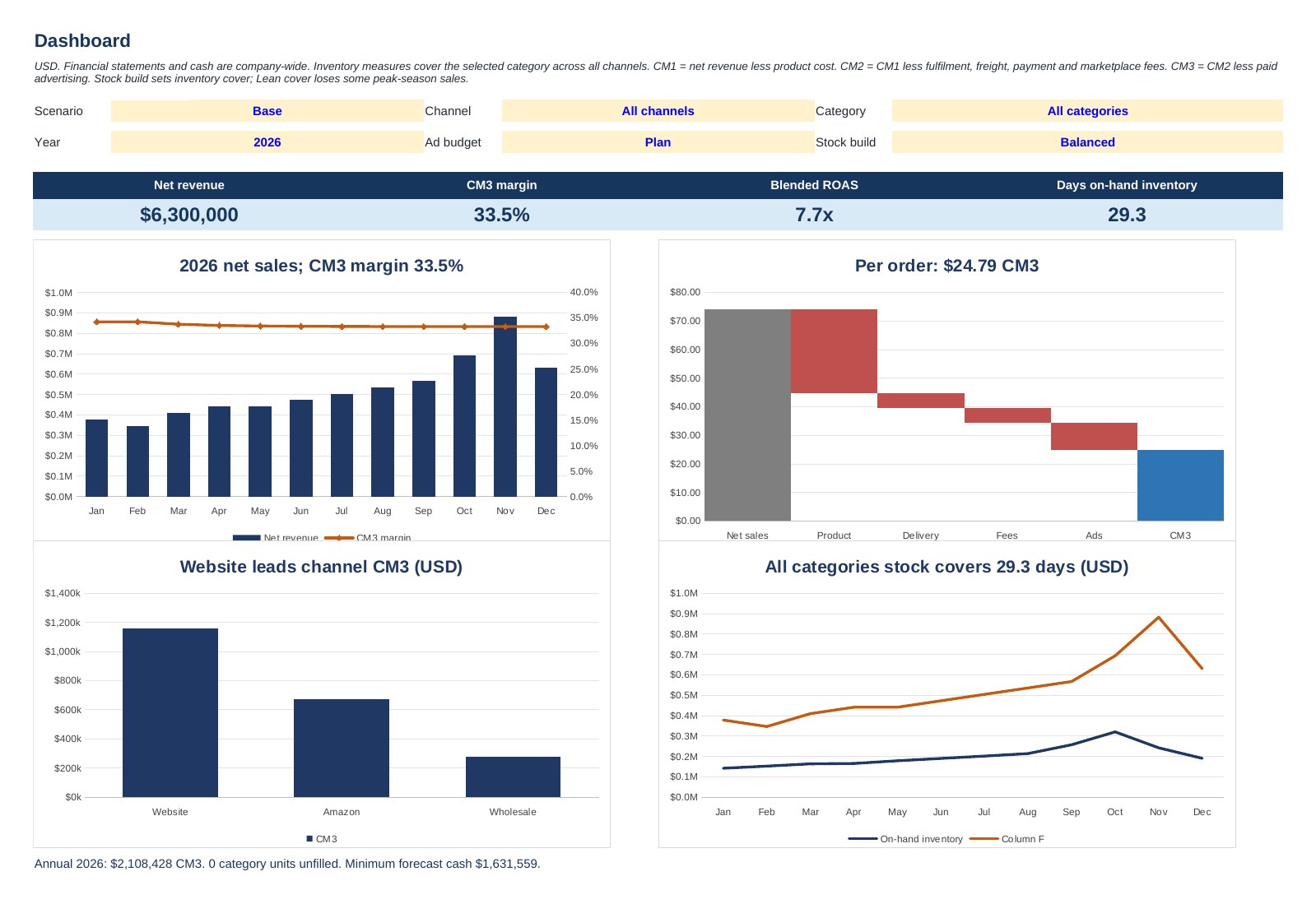
Owners see where profit really comes from, how much stock and cash a peak season needs, and what happens if ad spend changes. In the base case, pausing paid ads cuts revenue by about a quarter but CM3 by only about 3%.
Overview
A monthly operating and financial model for a direct-to-consumer homeware brand selling 40 SKUs through its own website, Amazon and wholesale. Demand by SKU and channel drives net sales after returns, and contribution is built down to CM3 after fulfilment, marketplace fees and paid advertising on Meta, Google and TikTok. Purchase orders follow a stock-cover policy with supplier deposits, goods in transit and payment terms, so inventory, working capital and cash move with every buying decision. How to use this model: On the Dashboard sheet, choose the scenario in cell D5, the channel in I5 and the category in N5, then the year, ad budget and stock build in row 7; a lean stock build loses some peak-season sales and an early Q4 build ties up more cash, so sales, CM3, stock and cash move together; chart titles name the channel and category shown; on the SKU review sheet, rank the 40 products on net sales, closing stock, unfilled units and coverage days, and on Financial review see the annual statements; product data sits on the SKU Master sheet and monthly forecast inputs on the Assumptions sheet.
Approach
Demand is forecast by SKU and channel, net of returns, and contribution is built down to CM3 after fulfilment, marketplace fees and paid media. Purchasing follows a stock-cover policy with deposits, transit time and supplier terms, feeding inventory, working capital and a three-statement model with lease accounting. Checks reconcile stock quantities and values, supplier balances and cash.
Capabilities
Skills
LET'S WORK TOGETHER
Need something like this for your business?
Tell me what you are trying to solve. I’ll respond with a practical view of how I can help.